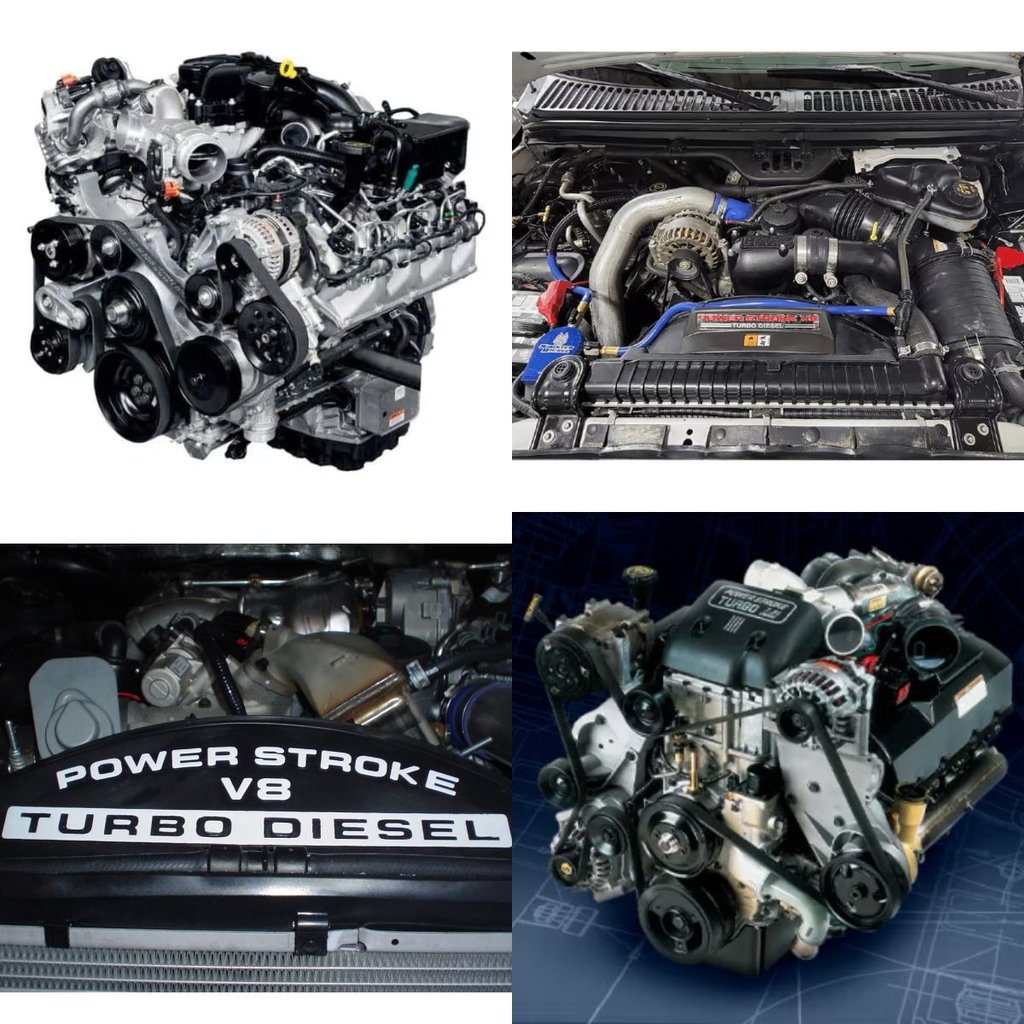
Think Your Ford Diesel Is Bulletproof? Think Again.
We’ve watched Ford diesels—6.0s, 6.4s, 6.7 Power Strokes grenade themselves under 150,000 km.
Not because they were “bad engines.”
Because the owner was doing a handful of totally normal driving habits that quietly shave years off the engine, turbo, injectors, DPF, and fuel system.
We’ve seen trucks hit 800,000 km on original major components… and we’ve seen others die young for one simple reason:
Diesels don’t die from km. Diesels die from habits.
Here are seven driving habits that quietly destroy Ford diesel engines—plus exactly what to do instead.
Habit #1: Cold Start… Then Drive Off Immediately:
This is the winter classic: start the truck and instantly throw it into gear.
When diesel oil is cold, it’s thick—more like syrup than oil. In those first seconds, oil hasn’t fully made it to critical areas like:
• Turbo bearings
• Valvetrain components (cams/lifters)
• High-pressure fuel system components
If you start it and drive off hard, you’re spinning parts at thousands of RPM with minimal lubrication.
Do this instead:
• Start the truck and let it idle 30–45 seconds (don’t rev it).
• Drive gently until oil and coolant temps come up.
• Save towing and boost for when it’s actually warm.
That tiny change can add years to turbo life.
Habit #2: Excessive Idling (The Silent Killer)
Diesel owners love to idle—job sites, drive-thrus, warm-ups, “cool-downs,” you name it.
But long idling is rough on modern diesels because combustion temps stay low, which leads to:
• Incomplete burn → soot buildup
• Soot coating EGR/DPF/intake/turbo vanes
• Fuel dilution (raw fuel washing down cylinder walls into the oil)
We’ve drained oil from 6.7s that smelled like straight diesel. That’s bearing damage waiting to happen.
Do this instead:
• If you’ll be stopped more than 60–90 seconds, shut it off.
• If you must idle for PTO/tools, use high-idle mode.
• In cold weather, use a block heater instead of endless idling.
Your diesel isn’t a generator.
Habit #3: Lugging the Engine (Low RPM + High Load)
This one makes people feel like they’re being “gentle” because the RPM is low.
But towing 10,000 lb at ~1,200 RPM and letting it struggle is a recipe for:
• Low RPM → low oil pressure
• High load at low RPM → high cylinder pressure
• Turbo struggling → soot buildup
• Unpredictable EGT spikes
We’ve seen trucks toast head gaskets and wear bearings faster because they were constantly lugged under load.
Do this instead:
• Under load, aim for ~1,800–2,300 RPM (roughly the happy working range).
• Downshift before hills.
• Don’t floor it at 1,200 RPM—let the engine breathe in its torque band.
This habit alone can prevent thousands in repairs.
Habit #4: Hot Shutdown After Heavy Pull (Turbo Killer)
This is one of the fastest ways to shorten turbo life:
You tow hard up a grade, pull into a spot… and shut the engine off immediately.
Here’s what happens all at once:
1 The turbo is still extremely hot (turbine side can be 500–600+°C)
2 Oil flow stops instantly when the engine shuts off
3 The oil trapped in the turbo cooks into carbon (“coking”)
4 That carbon scratches bearings → shaft play → failure
Do this instead:
After towing, hauling, climbing grades, or hard driving:
• Let it idle 2–4 minutes
• If you have EGT monitoring, wait until you’re down around ~300–400°C
• Then shut it down
This single habit can double turbo lifespan.
Habit #5: Short Trips (The DPF Assassin)
Short-trip driving is sneaky, and it destroys modern emissions diesels.
Modern diesels need heat—consistent heat—for clean combustion and successful regen. A 2–5 minute drive usually means:
• Engine never reaches operating temp
• Soot output goes up
• DPF loads faster
• Regen attempts get interrupted
• Extra fuel used for regen can cause fuel dilution
• EGR and intake sludge build quickly (condensation + soot = tar)
I’ve seen low-km trucks (20–30k) already acting like high-mileage problem children because they only do short hops.
Do this instead:
If short trips are unavoidable:
• Once a week, do a 25–30 minute highway drive
• Keep RPM around ~1,900–2,200
• Let the truck fully warm and let regen complete
Your diesel needs a regular “workout.”
Habit #6: Bad Towing Technique
Ford diesels were built to tow. They just weren’t built to be towed wrong.
Here are the common mistakes I see:
• Towing in too high a gear (lugging)
• Riding the brakes downhill (overheats brakes and destabilizes)
• Letting trans temps spike because you didn’t downshift
• Flooring it while towing (instant EGT spikes)
• Using cruise control on steep grades (it’ll often floor it to hold speed)
• Not cooling the turbo after towing (see Habit #4)
Do this instead (quick towing rules):
• Keep RPM ~1,800–2,400 under load
• Downshift early—don’t wait until it struggles
• Watch temps (EGT/trans if available)
• Avoid cruise on steep grades
• Cool down after heavy pulls
Tow smart and these trucks will reward you.
Habit #7: Riding the Turbo Too Hard (Boost Abuse)
The turbo on a Power Stroke is a masterpiece… and it’s also expensive and sensitive to abuse.
What kills turbos over time:
• Full boost before warm-up (cold oil + high RPM = wear)
• Long periods of sustained boost/heat
• Rapid on-off throttle (can contribute to vane issues over time)
• Dirty oil (bearing wear)
• Neglected air filter (sand/dust through the compressor)
• Flooring it under low RPM with heavy trailers in high gear
Do this instead:
• No heavy boost until oil temp is up
• Avoid full throttle under ~1,700 RPM
• Ease into power—especially under load
• Keep up with oil and air filter maintenance
• Always cool down after hard pulls
Treat the turbo right and it can last 200k–300k km.
The Bottom Line: Ford Diesels Don’t Die From Age—They Die From Habits.
Whether you drive a diesel 6.0/6.4/6.7—same principle:
The way you warm it up, idle it, tow with it, shut it down, and handle regen is everything.
I’ve seen Ford diesels reach 500,000 km on original turbos and injectors. I’ve also seen them die at 60,000 km.
The difference was almost never “the engine.”
It was the owner’s habits.
Quick Weekly Checklist
• Idle 30–45 seconds on cold start, drive gently until warm
• Don’t idle more than 60–90 seconds unless you must
• Don’t lug: downshift and keep RPM in the working band under load
• Cool down 2–4 minutes after heavy pulls
• Do a weekly 25–30 min highway run if you short-trip often
• Tow smart: manage gears, avoid cruise on steep grades, watch temps
• Respect boost: warm oil first, clean air filter, clean oil, cool down
For more information and guidance, get in touch with us.